The most common mistake I see in luxury living rooms is that they look beautiful in photographs and feel uncomfortable in person. The two are not the same thing — and reconciling them is most of what we do.
A living room that works has to do several things simultaneously. It has to feel generous and calm when you walk in. It has to function for how you actually use it — whether that means hosting twelve for drinks or sitting alone on a Sunday morning with a book. And it has to hold its character over time, not just on the day the photographer arrives.
Over twenty years of designing residential interiors in Washington DC and Dallas, I’ve come back to the same set of principles. They’re not rules — rules produce rooms that look correct but feel wrong. They’re more like starting points that keep a room honest.
1. Decide what the room is for before you decide how it looks
This sounds obvious, and it is. Most clients skip it anyway. They come to us with images of rooms they love, which is helpful, but the images tell us what they’re drawn to aesthetically, not how the room needs to function for their life.
A room designed for a couple who entertain frequently looks completely different from the same room designed for a couple who rarely have guests but spend every evening in it together. The furniture arrangement changes. The lighting scheme changes. The amount of storage changes. The materials change, because durability matters differently in each case.
"Before we talk about how a room looks, we spend time understanding how it lives. The two conversations always inform each other."
- Lorna Gross
2. Anchor the room with one decision, then build around it
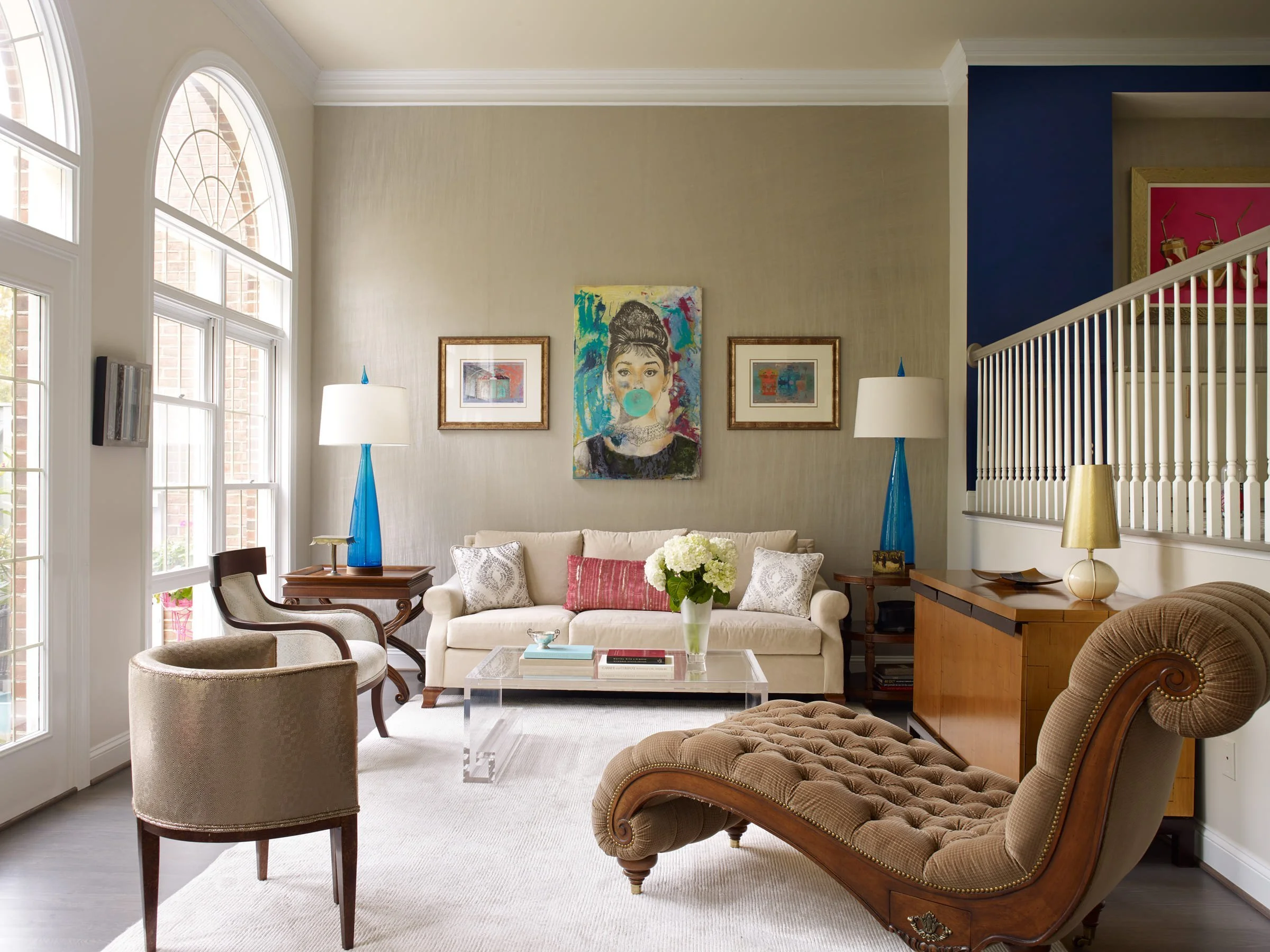
Every room needs an anchor — a piece, a material, or a moment that everything else organises around. In a living room this is usually a sofa, a rug, or an architectural element like a fireplace or a view. The anchor doesn't have to be the most expensive thing in the room. It just has to be the most decided.
Once you know what the room is anchored to, every subsequent decision becomes easier. Does this work with the anchor? If yes, consider it. If no, put it aside no matter how much you love it in isolation.
3. Lighting is not an afterthought
In every living room that doesn't feel right, lighting is the first thing I look at. Not because it's always the problem — but because it's almost always a contributor.
Most homes are lit for utility: one overhead source, possibly two. This produces a room that looks flat at night and feels institutional regardless of how much was spent on the furniture. Good residential lighting layers three types of sources:
01 Ambient light
Most homes are lit for utility: one overhead source, possibly two. This produces a room that looks flat at night and feels institutional regardless of how much was spent on the furniture. Good residential lighting layers three types of sources:
02 Task light
Directed light for specific activities: reading, working, looking at art. Floor lamps and table lamps do this work.
03 Accent light
Light that shapes the room — grazing a textured wall, illuminating a bookshelf, uplighting a plant. This is what makes a room feel designed rather than furnished.
4. Scale almost always matters more than style
Clients come to us with strong aesthetic preferences — and those preferences are valuable. But the single most common reason a room doesn't feel right has nothing to do with style. It has to do with scale.
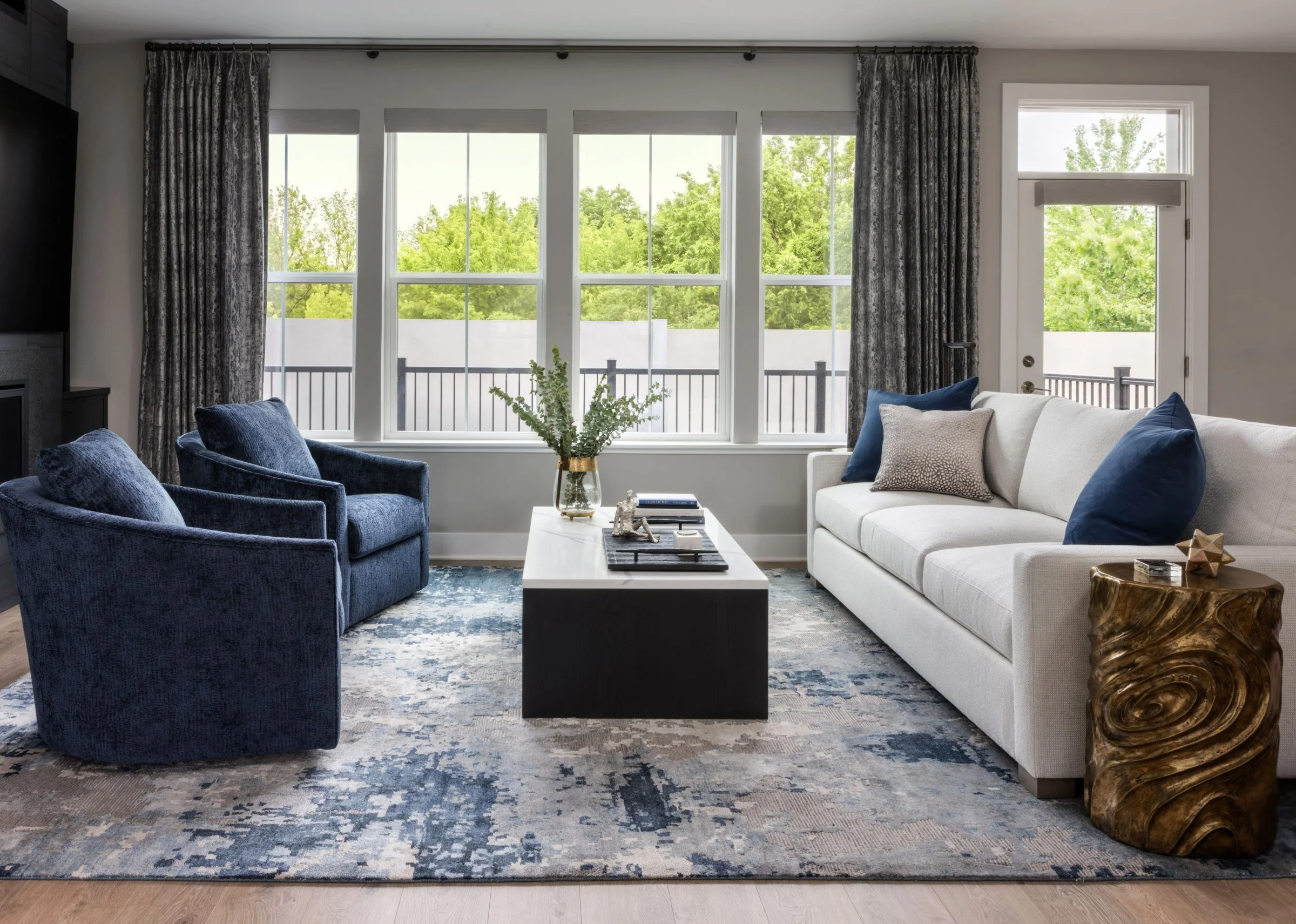
A sofa that is too small for the room makes the room feel cavernous. A coffee table that is too large makes the seating feel cramped. A rug that doesn't extend under the front legs of every piece of furniture reads as an afterthought regardless of its quality. Scale is the invisible variable that either holds a room together or pulls it apart.
A practical note on rugs
The most frequent scale mistake we see is an undersized rug. In a living room, the rug should be large enough that the front legs of every sofa and chair sit on it. When in doubt, go larger — a rug that is too big is almost never the problem. A rug that is too small always is.
5. Edit more than you add
The rooms that feel most generous — most luxurious, in the truest sense — are rarely the ones with the most in them. They're the rooms where every decision was kept and every doubt was removed.
The discipline of editing is harder than the discipline of selecting. Selecting requires taste. Editing requires confidence — the willingness to take something out even when you like it, because the room is better without it.
This is where working with a designer is genuinely useful. Not because designers have better taste than their clients, but because they're not emotionally attached to any individual piece. They can see the room as a whole and make decisions from that perspective.
-
The honest answer is that most rooms benefit more from editing than from replacing. We usually start with a room assessment — understanding what is structurally sound versus what is simply wrong for that space. Often the furniture is fine but the arrangement, the lighting, or the rug size is the issue. A consultation will tell you which category your room falls into before any commitment is made.
-
[Draft — answer to be provided]
-
[Draft — answer to be provided]
-
[Draft — answer to be provided]
-
[Draft — answer to be provided]
— READY TO BEGIN —
Ready to design your living room?
Book a complimentary discovery call with our team. No commitment required.
